 +86 15338350382

 English
 Spanish
 French
 Russian
 Italian
 German
 Japanese

 7 min readPublished Mar 05 2026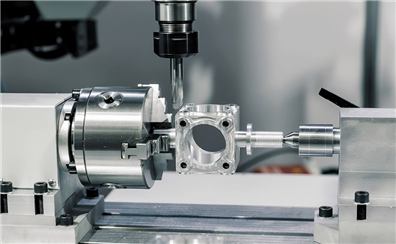
Introduction to Custom Manufacturing
Custom manufacturing refers to the process of producing parts or components according to specific customer specifications and requirements, rather than mass-producing standardized products. This approach allows for greater flexibility, enabling manufacturers to meet the unique needs of various industries, including aerospace and defense.
Advantages of Custom Manufacturing in the A&D Industry
Geometric Design and Optimization Freedom
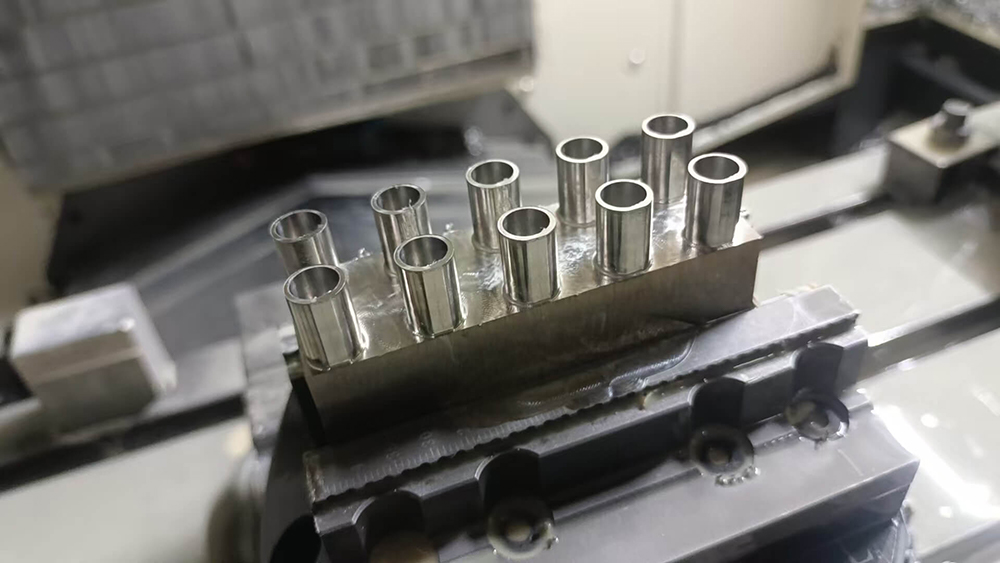
One of the most significant advantages of custom manufacturing in the A&D industry is the freedom it offers in geometric design and optimization. Traditional manufacturing methods often impose limitations on the complexity and precision of components. However, custom manufacturing, particularly through advanced techniques like additive manufacturing (3D printing), can create intricate geometries that are impossible or impractical to achieve with conventional methods.
For instance, aerospace components can benefit from complex internal structures like lattice supports or optimized surface topologies. These features can significantly enhance mechanical properties, reduce weight, and improve aerodynamic performance. The ability to design and manufacture such components on-demand allows for the development of innovative solutions tailored to specific mission requirements.
Functional Integration and Part Consolidation
Custom manufacturing also facilitates functional integration and part consolidation, which are crucial for reducing the overall weight and complexity of aerospace systems. Traditional manufacturing often requires assembling multiple simple parts to form a functional component, leading to increased weight, maintenance costs, and potential reliability issues.
In contrast, custom manufacturing allows for the integration of multiple functions within a single component. For example, by using materials with varying properties in specific regions of a part, manufacturers can create multifunctional components that combine strength, heat resistance, and other desired attributes. Additionally, part consolidation reduces the number of components required, simplifying assembly processes and lowering production costs.
Materials and Energy Efficiency
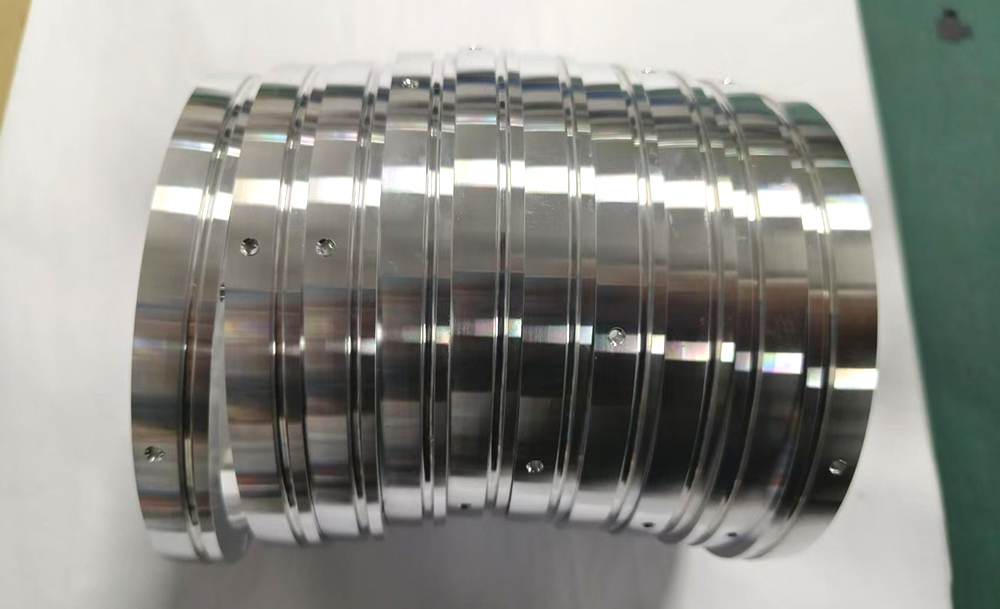
Custom manufacturing contributes to materials and energy efficiency by minimizing waste and optimizing resource use. Techniques like additive manufacturing enable near-net-shape production, where components are built layer by layer to closely match the final desired shape. This reduces the need for extensive machining and material removal, lowering material waste and energy consumption.
Furthermore, custom manufacturing allows for the use of advanced materials that offer superior performance but may be difficult to process using traditional methods. For instance, nickel-based superalloys and titanium alloys are widely used in aerospace engines due to their high-temperature strength and corrosion resistance. Custom manufacturing techniques can accurately deposit these materials in complex geometries, ensuring optimal material utilization and component performance.
Shortened Manufacturing Cycles
The ability to rapidly prototype and manufacture components is another critical advantage of custom manufacturing in the A&D industry. Traditional manufacturing processes often involve long lead times due to the need for tooling, setup, and multiple processing steps. However, custom manufacturing techniques, particularly those involving additive manufacturing, can significantly reduce production times.
For example, additive manufacturing allows for the direct production of complex components from CAD data, eliminating the need for tooling and reducing the number of manufacturing steps. This can lead to substantial time savings, enabling faster product development cycles and quicker response to changing mission requirements.
Enhanced Customization and Small Batch Production
The A&D industry frequently requires components that are unique or produced in small batches. Traditional mass-production methods are often not cost-effective for such applications due to high setup costs and economies of scale. Custom manufacturing, however, is well-suited for these types of production runs.
By leveraging advanced manufacturing techniques, manufacturers can produce small batches of highly customized components cost-effectively. This flexibility is particularly important in the A&D industry, where unique requirements and rapid technological advancements necessitate frequent updates and modifications to equipment and systems.
Applications of Custom Manufacturing in the A&D Industry
Aerospace Components
Custom manufacturing has revolutionized the production of aerospace components, enabling manufacturers to create parts with unprecedented complexity and precision. From lightweight structural components to high-performance engine parts, custom manufacturing techniques have significantly enhanced the performance and reliability of aerospace systems.
For instance, additive manufacturing has been used to produce complex turbine blades with internal cooling channels, optimizing thermal management and improving engine efficiency. Similarly, fuel nozzles and combustor liners have been manufactured using custom techniques to enhance combustion processes and reduce emissions.
Defense Systems
In the defense sector, custom manufacturing plays a crucial role in the development and production of advanced weapon systems and other critical equipment. Custom-made components can be tailored to meet specific operational requirements, ensuring optimal performance and reliability in harsh environments.
For example, custom manufacturing techniques have been used to produce armor plates and protective structures for military vehicles, providing enhanced ballistic and blast protection. Additionally, precision-machined components for guided missiles and other precision munitions have been developed using custom manufacturing methods to ensure accuracy and reliability in combat situations.
Tooling and Fixtures
Custom manufacturing is also essential for the production of tooling and fixtures used in the aerospace and defense industries. These components are often required to meet strict tolerances and perform reliably under extreme conditions. Custom manufacturing techniques allow for the precise production of tooling and fixtures tailored to specific applications, ensuring high-quality results and increased production efficiency.
Prototyping and Testing
Rapid prototyping and testing are critical stages in the development of new aerospace and defense systems. Custom manufacturing techniques enable manufacturers to quickly produce prototypes for testing and evaluation, accelerating the design and development process. This capability is particularly important in the A&D industry, where time-to-market and system performance are critical factors.
For instance, additive manufacturing can be used to produce functional prototypes of aerospace components for aerodynamic testing and validation. Similarly, custom-made test fixtures and equipment can be developed to simulate operational conditions and assess system performance under various scenarios.
Case Studies of Custom Manufacturing in the A&D Industry
General Electric (GE) Aviation
GE Aviation is a leading provider of aircraft engines, components, and systems for commercial and military applications. The company has embraced custom manufacturing techniques, particularly additive manufacturing, to enhance its product offerings and maintain a competitive edge in the aerospace industry.
For example, GE Aviation has developed fuel nozzles for its jet engines using additive manufacturing. These nozzles are produced with intricate internal cooling passages that optimize thermal management and improve engine efficiency. The use of additive manufacturing has enabled GE Aviation to reduce the weight of the nozzles while maintaining high mechanical performance, contributing to overall fuel savings and reduced emissions.
Lockheed Martin
Lockheed Martin is a global aerospace, defense, and security company that relies on custom manufacturing to meet the unique requirements of its customers. The company has invested heavily in advanced manufacturing technologies, including additive manufacturing, to support its product development and production efforts.
Lockheed Martin has used custom manufacturing techniques to produce complex components for various defense systems, including missiles, aircraft, and satellites. For instance, the company has developed lightweight structural components for its F-35 Lightning II fighter jet using additive manufacturing. These components contribute to the aircraft’s overall performance and reduced fuel consumption.
Boeing
Boeing is another major player in the aerospace industry that has adopted custom manufacturing to enhance its product portfolio. The company has leveraged additive manufacturing and other advanced techniques to produce components for its commercial and military aircraft.
Boeing has used custom manufacturing to produce parts for its 737 MAX and 787 Dreamliner aircraft, including brackets, brackets, and other structural components. These components are produced with high precision and tailored to meet specific design requirements, contributing to the aircraft’s overall performance and reliability.
Challenges and Future Trends in Custom Manufacturing for the A&D Industry
Despite the numerous advantages of custom manufacturing in the A&D industry, several challenges remain. These include the high cost of advanced manufacturing equipment, the need for skilled labor, and the potential for quality variations in produced components.
To address these challenges, the A&D industry is continuously exploring new technologies and methodologies to improve the efficiency and effectiveness of custom manufacturing processes. For instance, the integration of artificial intelligence (AI) and machine learning (ML) algorithms can optimize production workflows, predict component performance, and detect defects early in the manufacturing process.
Additionally, advancements in materials science and process engineering are enabling the development of new materials and manufacturing techniques that further expand the capabilities of custom manufacturing. For example, the use of composites and advanced alloys can lead to lighter, stronger, and more durable components for aerospace and defense applications.
As the A&D industry continues to evolve, it is expected that custom manufacturing will play an increasingly critical role in supporting innovation and maintaining a competitive edge. By leveraging advanced technologies and methodologies, manufacturers can overcome current challenges and unlock new opportunities for growth and development in the aerospace and defense sectors.
Conclusion
Custom manufacturing offers numerous advantages for the aerospace and defense industry, enabling manufacturers to meet unique design and performance requirements while optimizing materials and energy use. From lightweight structural components to advanced weapon systems, custom manufacturing techniques have significantly enhanced the capabilities of aerospace and defense systems.
As the industry continues to evolve, it is essential for manufacturers to stay abreast of new technologies and methodologies that can further improve the efficiency and effectiveness of custom manufacturing processes. By embracing innovation and adapting to changing market demands, manufacturers can maintain competitiveness and provide customers with higher quality products and services.



 sophia@alcrocn.com
 +86 15338350382
 6th North Street, Xiagang Community, Chang'an Town, Dongguan City, Guangdong Province, China.
