 +86 15338350382


 English
 Spanish
 French
 Russian
 Italian
 German
 Japanese


 8 min readPublished Oct 26 2026
Introduction: Surface Finishing Is Not “The Last Step”—It’s an Extension of CNC Capability
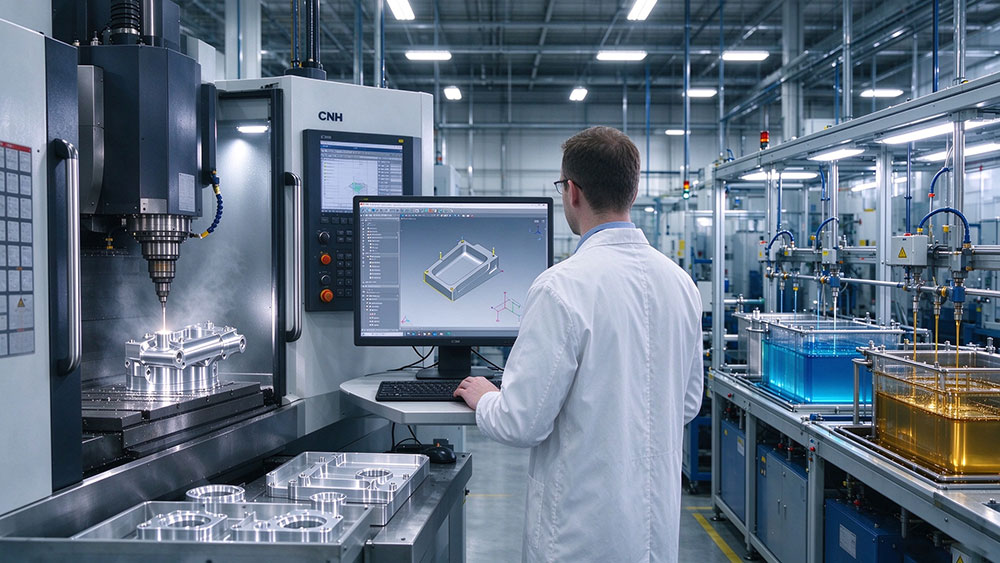
In precision manufacturing, surface finishing is often misunderstood as a purely cosmetic operation. Engineers who truly understand the process chain know otherwise: the quality of surface finishing on a CNC-machined part is largely determined the moment the cutting tool contacts the material. Coating adhesion, uniformity, and dimensional stability all depend on the microscopic geometric foundation established during CNC machining.
For procurement engineers in aerospace, medical devices, and automotive electronics, the core question when evaluating a surface finishing supplier is never simply “Can you do anodizing?” It is: How deeply do you understand the process coupling between CNC machining and surface finishing?
This article approaches the topic from the machining side, systematically examining the design prerequisites that CNC machining must fulfill for several mainstream finishing processes, with specific part-type examples.
1. CNC Machining: The “Invisible Substrate Engineer” for Surface Finishing
1.1 Surface Roughness: The Micro-Topography That Determines Coating Adhesion
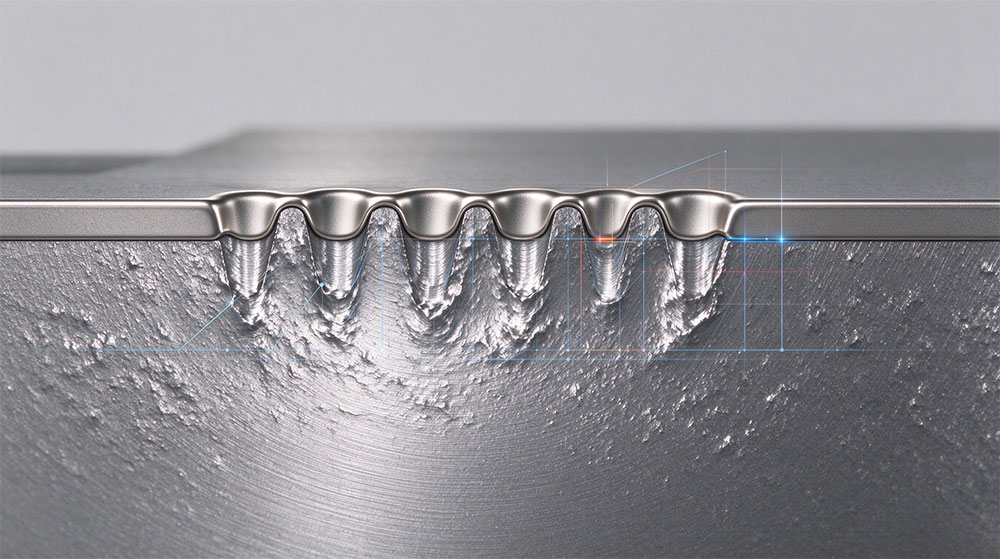
Electroplating processes impose specific roughness requirements on CNC-machined surfaces. For copper plating, achieving optimal adhesion typically requires maintaining a Ra value strictly between 0.8 μm and 1.6 μm—this particular micro-peak-and-valley structure provides the mechanical anchoring necessary for the copper layer to bond securely. Surfaces that are too smooth (below Ra 0.4 μm) lack mechanical interlocking; surfaces that are too rough risk porosity or stress concentration within the coating.
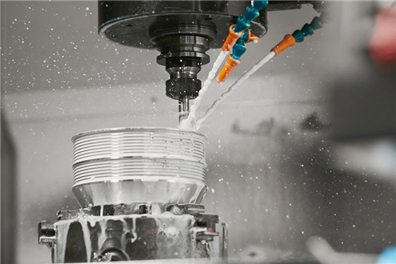
This means that the finish-machining cutting strategy in CNC—tool selection, feed rate, step-over, and coolant application—is not a matter of arbitrary parameter choice. A CNC machine that can consistently deliver the target Ra range is itself the first line of defense for finishing quality.
1.2 Dimensional Tolerance and Coating Thickness: The Math That Must Be Done Upfront
Electroplating adds a metallic layer to every exposed surface of a part. This means machining must be compensated for coating thickness. For threaded features, the total dimensional change on a threaded surface is generally 4 times the specified plating thickness. Failure to calculate this growth during CNC programming guarantees that precision parts will bind or fail during final assembly.
For structural components with ±0.01 mm tolerances, the impact of plating thickness is decisive. In industry practice, for precision CNC parts requiring strict dimensional control, acid copper baths are typically selected to achieve ±0.005 mm tolerances. Functional surfaces such as bearing seats and precision internal threads must be selectively protected using custom silicone plugs and chemical-resistant masking tapes to keep assembly datums as bare metal, preserving their original ±0.003 mm geometric tolerances.
1.3 Edge Geometry: The Invisible Variable in Current Density and Coating Uniformity
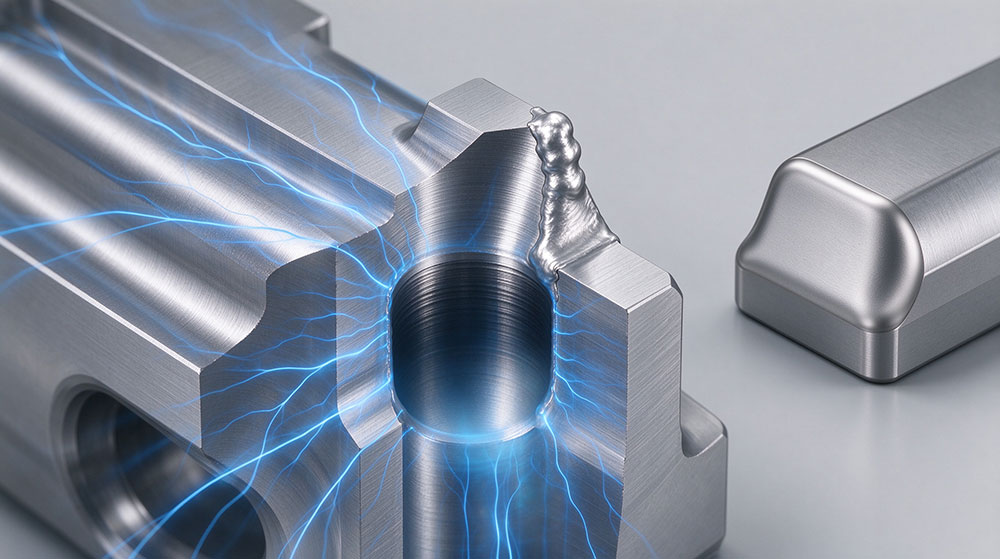
During electroplating, current density does not distribute evenly across complex CNC geometries. High current density at sharp edges causes accelerated deposition, leading to nodules or dimensional overshoot. Deep blind holes face the “Faraday cage effect,” where current struggles to reach the bottom, resulting in thin or absent coating.
Experienced CNC machinists account for these factors at the programming stage: increasing edge fillet radii on parts destined for plating, or designing cross-drilled vent holes in deep blind holes to facilitate electrolyte circulation and gas escape. These adjustments, though subtle, directly determine first-pass success rates in downstream finishing.
2. Typical Finishing Processes and Their Corresponding CNC Part Types
2.1 Anodizing — The Default for Aluminum Components
Principle: Anodizing is an electrochemical process that forms a dense aluminum oxide layer on the surface, significantly improving corrosion resistance and surface hardness while supporting a range of coloring options.
Typical CNC parts:
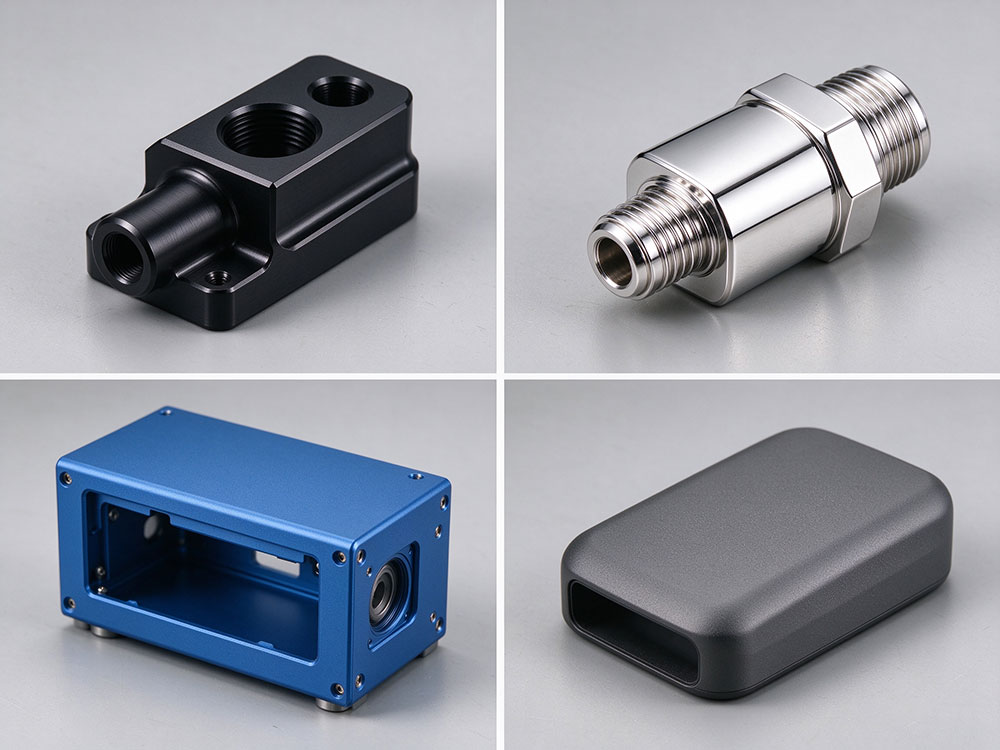
Aerospace structural components: CNC-machined bulkheads and wing spars in 6061 and 7075 aluminum, with clear or black anodized finishes that withstand aviation-grade exposure.
Robotic end-effector mounting plates: Corrosion-resistant anodized aluminum CNC mounting plates serving aerospace, medical, robotics, and automotive applications.
Electronic enclosures: Anodized films provide both protection and a dyeable surface for aluminum housings without compromising physical properties.
Machining prerequisites: Anodizing requires “hanging points” for electrical contact. These contact areas often show white residue and may be at risk of damage. Design should place hanging point holes in non-functional areas to avoid compromising overall appearance.
2.2 Electroplating — Functional Coatings for Conductivity and Wear Resistance
Principle: Electroplating uses external current to deposit metal ions onto CNC part surfaces. Copper, nickel, and zinc-nickel coatings improve corrosion resistance, conductivity, wear behavior, and solderability.
Typical CNC parts:
High-power heat sinks and busbars: Copper plating is the core process for electrical conductivity and EMI shielding.
Connector housings and control knobs: Nickel plating provides aesthetic appearance while preventing corrosion on these CNC components.
Racing steering rack housings: CNC-machined from 2014 aluminum alloy, with hard, wear-resistant coating on internal surfaces to maintain actuator seal integrity.
Machining prerequisites: Beyond dimensional compensation and masking strategies, plated parts should avoid excessively deep blind holes. Cross-drilled vent passages are recommended to ensure uniform internal coverage.
2.3 Powder Coating — Durable Protection for Demanding Environments
Principle: Powder coating applies charged powder particles to metal surfaces, which cure into a tough polymer layer with excellent wear and chemical resistance.
Typical CNC parts:
CNC machine enclosures and guards: Coatings must resist cutting fluids and lubricants, achieving a minimum of 120 inch-pounds direct impact resistance, with 160 inch-pounds preferred near the cutting zone.
Outdoor industrial enclosures: Quality polyester powders provide high UV protection, extending enclosure service life in outdoor exposure.
Customized instrument panels and housings: Powder coating enables custom RAL color matching after CNC machining, combining protection with aesthetics.
Machining prerequisites: Powder coating typically requires bead blasting or chemical pretreatment for adhesion. Deep tool marks or burrs on CNC surfaces can “print through” the coating. Automated deburring and surface homogenization before coating are critical.
2.4 Bead Blasting — The “Standardization” Step Before Anodizing
Bead blasting projects glass or ceramic beads at high pressure onto part surfaces, creating a uniform matte finish that hides machining marks and provides a consistent substrate for subsequent anodizing or powder coating.
Typical CNC parts: Aluminum enclosures, consumer electronics structural components, medical device handles. After blasting, aluminum surfaces can be acid-cleaned and hot-water sealed in preparation for anodizing.
3. Why Choose a Surface Finishing Provider with In-House CNC Machining Capability?
The market offers two types of finishing providers: standalone post-processing shops and integrated manufacturers with both CNC machining capacity and finishing lines. The difference becomes apparent quickly during project execution.
Standalone post-processors begin their involvement when parts arrive. If the CNC-machined parts have inadequate burr control, roughness outside the target range, or unaccounted plating thickness, the finisher can only work within those constraints—and yield loss falls on the customer.
Integrated providers engage from the DFM review stage. CNC programming accounts for downstream finishing windows, compensating dimensions, optimizing edge geometry, and planning hanging point locations. This translates to fewer reworks, more predictable lead times, and more consistent production quality.
For procurement engineers, the right question to ask a finishing supplier is not “How many processes can you offer?” but rather: Is there a structured process-integration workflow between your CNC machining team and your finishing team?



 sophia@alcrocn.com
 +86 15338350382
 6th North Street, Xiagang Community, Chang'an Town, Dongguan City, Guangdong Province, China.
