 +86 15338350382


 English
 Spanish
 French
 Russian
 Italian
 German
 Japanese


 10 min readPublished Oct 30 2026
Introduction
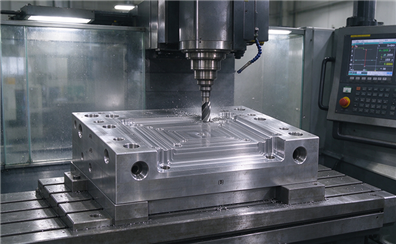
Mold parts sit at the intersection of design intent and manufacturing reality. A mold base that is out of parallel by a few microns, a core insert with an inconsistent surface finish, or a slide that binds under thermal load — any of these can cascade into dimensional drift in the molded product, longer cycle times, and premature tool wear. This is why CNC machining for mold parts is not a commodity operation. It is a precision discipline that demands the right machine tools, the right process sequencing, and a supplier who understands how each component interacts within the mold assembly.
At Alcro, CNC machining is the backbone of our mold parts manufacturing. We machine mold bases, cores and cavities, slides, ejector system components, and a wide range of custom mold details — all under one roof, with tolerances routinely held to ±0.01mm and tighter on request. This article breaks down the major categories of mold parts we machine, what makes each category demanding from a CNC perspective, and how our process controls translate into mold performance.
What Counts as “Mold Parts” in CNC Machining?
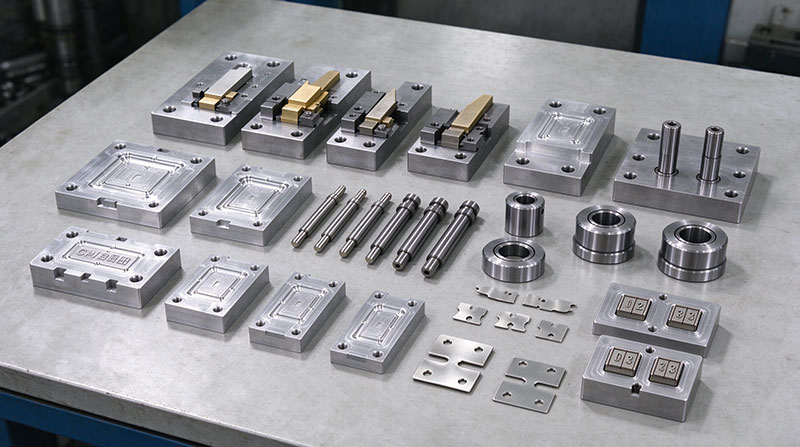
The term covers a broad set of components that together form a working mold. In injection molding, die casting, and stamping tooling, the CNC-machined mold parts typically include:
Mold base and plates — the A/B plates, top clamping plate, bottom clamping plate, ejector plates, and support plates that form the structural frame of the mold.
Core and cavity inserts — the precision-machined blocks that define the internal and external geometry of the molded part.
Slides, lifters, and angle pins — the motion components that form undercuts and side features.
Ejector system components — ejector pins, ejector sleeves, ejector plates, and return pins that push the finished part off the core.
Guide and alignment components — guide pillars, guide bushes, and leader pins that keep the mold halves aligned through every cycle.
Cooling system components — baffles, bubblers, and cooling channel inserts.
Custom details and inserts — date stamps, part number inserts, gate inserts, and any non-standard detail machined to drawing.
Each category carries its own tolerance profile, surface finish requirement, and material challenge. The CNC machining strategy — tool selection, workholding, cutting parameters, and inspection method — must be matched to the specific part type.
Mold Parts That Require CNC Machining: A Component-by-Component Breakdown
1. Mold Base Plates and Structural Components
The mold base is the foundation. A/B plates must be flat, parallel, and square within tight limits; otherwise the core and cavity will not close uniformly, and the molded part will show flash, short shots, or uneven wall thickness. CNC milling is the primary process for machining mold base plates — pocketing for insert seats, drilling and tapping for mounting holes, boring for guide pillar and guide bush locations, and milling of the parting line surface.
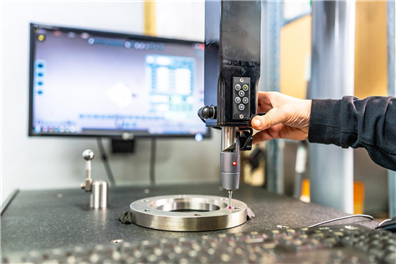
The critical CNC considerations for mold base plates are flatness and parallelism across large surfaces. A 600mm × 800mm plate that is out of flat by 0.05mm can create sealing problems that no amount of clamping pressure will solve. At Alcro, we machine mold base plates on 3-axis and 4-axis CNC milling centers with in-process verification using precision metrology, holding flatness and parallelism within the tolerances required for the specific mold design.
2. Core and Cavity Inserts
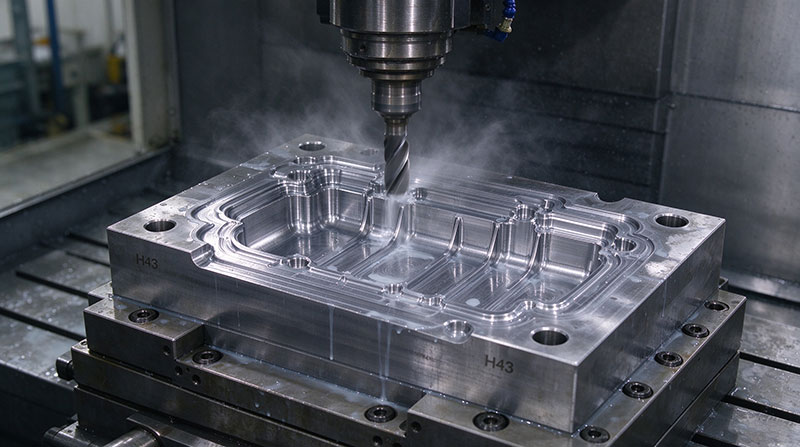
The core and cavity are where the molded part’s geometry is born. The core forms internal features — ribs, bosses, holes, threads, undercuts, and recessed areas — while the cavity forms the external or visible surface. Any error on the core or cavity surface transfers directly to the finished part, which is why this category demands the tightest tolerances and the best surface finishes in the entire mold.
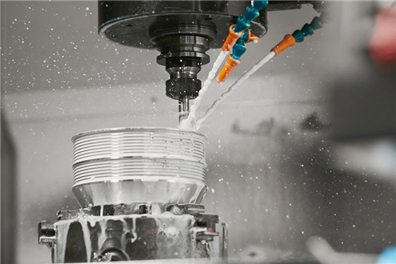
CNC machining of cores and cavities involves 3-axis milling for simpler geometries and 5-axis or 3+2-axis machining for complex contours, deep cavities, and features that would require multiple setups on a 3-axis machine. Hard milling — machining the core or cavity after heat treatment — is increasingly common because it eliminates the dimensional shift that occurs during hardening and reduces the need for EDM. We machine core and cavity inserts in tool steels including P20, H13, S136, and 718, as well as in hardened materials up to 62 HRC where the application requires it.
Surface finish on cores and cavities is not cosmetic — it affects part release, cooling uniformity, and the appearance of the molded product. We target surface finishes from Ra 0.8μm for as-machined functional surfaces down to mirror-grade finishes where the molded part requires optical clarity or a high-gloss finish.
3. Slides, Lifters, and Angle Pin Components
Slides and lifters handle undercuts and side-action features that cannot be formed by the core and cavity alone. These components must move smoothly under thermal expansion, resist wear over hundreds of thousands of cycles, and maintain their fit within the slide base and wear plates.
CNC machining of slide components involves precision milling of the slide body, the slide base, the inclined pin holder, and the wear plates. The fit between the slide and its guide surfaces is typically held to ±0.01mm or tighter, and the angle of the inclined pin must match the angle of the slide’s inclined hole precisely — any mismatch creates binding, accelerated wear, or failure to retract. We machine slide components in materials including S55C, S45C, and hardened tool steels, with heat treatment and precision grinding where the application demands it.
4. Ejector System Components
Ejector pins, ejector sleeves, ejector plates, and return pins are the components that push the molded part off the core after the mold opens. A bent ejector pin, a pin that is too short, or an ejector plate that is not parallel to the core surface will cause ejection marks, part deformation, or — in the worst case — a part that sticks and cannot be removed.
CNC machining of ejector system components is often overlooked as “simple,” but the tolerance stack-up matters. Ejector pins must be straight and their heads must seat properly in the ejector retainer plate. Ejector plate guide pillars and bushes must keep the ejector set aligned through every cycle. We machine ejector plates with flatness and parallelism controls, and we produce custom ejector pins and sleeves in materials including SKD61, H13, and stainless steel, with hardness and surface finish matched to the molding resin and cycle count.
5. Guide Pillars and Guide Bushes
Guide pillars and guide bushes keep the cavity and core halves in perfect alignment. If alignment is lost, the molded part will have uneven wall thickness, the parting line will show steps, and the mold will wear prematurely.
CNC machining of guide pillars and bushes requires cylindrical accuracy, consistent hardness, and a surface finish that supports smooth sliding without galling. The bore in the mold plate that receives the guide bush must be concentric with the corresponding guide pillar location in the opposing plate — typically held to within ±0.005mm to ±0.01mm for precision molds. We machine guide pillar and bush locations using CNC boring and jig grinding where required, and we inspect concentricity and fit using CMM and pin gauges.
6. Cooling System Components
Cooling channels, baffles, bubblers, and cooling inserts directly affect cycle time and part quality. Poorly machined cooling components lead to hot spots, differential shrinkage, and warpage. CNC machining of cooling system components includes drilling and milling of cooling channels in cores and cavities, machining of baffle and bubbler features, and production of cooling inserts with conformal or near-conformal channel geometry where the design calls for it.
7. Custom Inserts and Details
Gate inserts, date stamps, part number inserts, core pins, and other custom details are small in size but critical in function. A gate insert that is not seated properly will cause gate blush or inconsistent fill. A core pin that is not concentric will produce an out-of-round hole. These parts are machined on CNC lathes and precision milling centers, often with the same tolerance discipline applied to the core and cavity.
Why CNC Machining Is the Right Process for Mold Parts
CNC machining is not the only way to make mold parts — EDM, wire cutting, and grinding all play a role. But for the majority of mold components, CNC machining offers a combination of advantages that no single alternative process can match:
Geometry freedom. 5-axis simultaneous machining can produce complex core and cavity geometry, deep ribs, and undercut features in a single setup, reducing the cumulative error that comes from multiple re-fixturing operations.
Material versatility. We machine mold parts in aluminum alloys for prototype and bridge tooling, in pre-hardened steels like P20 and 718H for production molds, in hardened tool steels up to 62 HRC for high-wear applications, and in copper alloys for high-thermal-conductivity cooling inserts.
Tolerance control. We routinely hold ±0.01mm on critical mold part dimensions, with capability to ±0.005mm for tight-tolerance features using precision grinding after CNC machining.
Surface finish capability. From functional as-machined finishes to mirror-grade surfaces for optical and high-gloss applications, CNC machining with the right tool path and cutting parameters delivers the finish the mold requires.
Prototype-to-production consistency. The same CNC process and inspection protocol that produces the first mold set applies to replacement parts and duplicate molds. This matters for mold maintenance and for customers who need a second source of identical mold parts.
How Alcro Controls Mold Part Quality
Mold parts that look correct on the bench can still fail in the press. Our quality process for mold parts addresses the dimensions that actually affect mold performance:
Material verification. Every mold part starts with verified material grade, heat treatment condition, and hardness. We check material certificates against the drawing specification before machining begins.
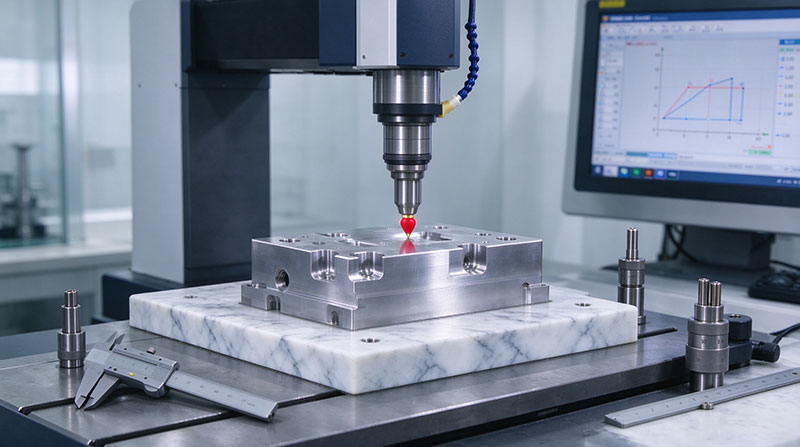
In-process inspection. Critical dimensions are checked during machining — not after — so that any drift is corrected before the part is finished. For core and cavity work, we verify wall thickness, depth, and contour against the 3D model at intermediate stages.
First Article Inspection (FAI). For new mold part designs and for customers with aerospace or medical end-use requirements, we perform full FAI with dimensional report, material certification, and surface finish verification.
Fit and function verification. Where the customer provides the mating component or the mold assembly data, we verify fit and clearances before shipment. For slides and ejector systems, we check movement and alignment under simulated operating conditions where practical.
Materials We Machine for Mold Parts
| Material | Typical Mold Parts | Key Properties |
|---|---|---|
| P20 / 1.2311 | Mold bases, cavity plates | Pre-hardened, good machinability |
| 718H / 1.2738 | Core and cavity inserts | Uniform hardness, polishable |
| H13 / 1.2344 | Cores, slides, ejector pins | Hot work, wear resistant |
| S136 / 1.2083 | Cavities for corrosive resins | Corrosion resistant, mirror polish |
| SKD61 | Ejector pins, core pins | Hot work, high hardness |
| S55C / S45C | Slide bases, wear plates | Medium carbon, heat treatable |
| Aluminum 7075 / 6061 | Prototype molds, bridge tooling | Lightweight, fast machining |
| Copper alloys (BeCu) | Cooling inserts, baffles | High thermal conductivity |
Getting the Most from Your Mold Parts CNC Machining Partner
Mold parts are not purchased in isolation. They are purchased to make a mold work — to produce parts that meet dimensional and cosmetic requirements, at the cycle time the project demands, for the number of cycles the business case assumes. The CNC machining partner you choose should be able to speak to all three of these dimensions.
At Alcro, we machine mold parts as part of a broader precision manufacturing capability that includes CNC milling, CNC turning, Swiss-type lathing, EDM, and surface finishing — all under one quality system. This means a mold base, a set of core and cavity inserts, and the accompanying slides and ejector components can be machined, inspected, and shipped as a coordinated package, not as separate orders from separate suppliers.
If you are sourcing mold parts and want a CNC machining partner who understands the mold as a system, not just a collection of drawings, we would like to hear about your project.



 sophia@alcrocn.com
 +86 15338350382
 6th North Street, Xiagang Community, Chang'an Town, Dongguan City, Guangdong Province, China.
